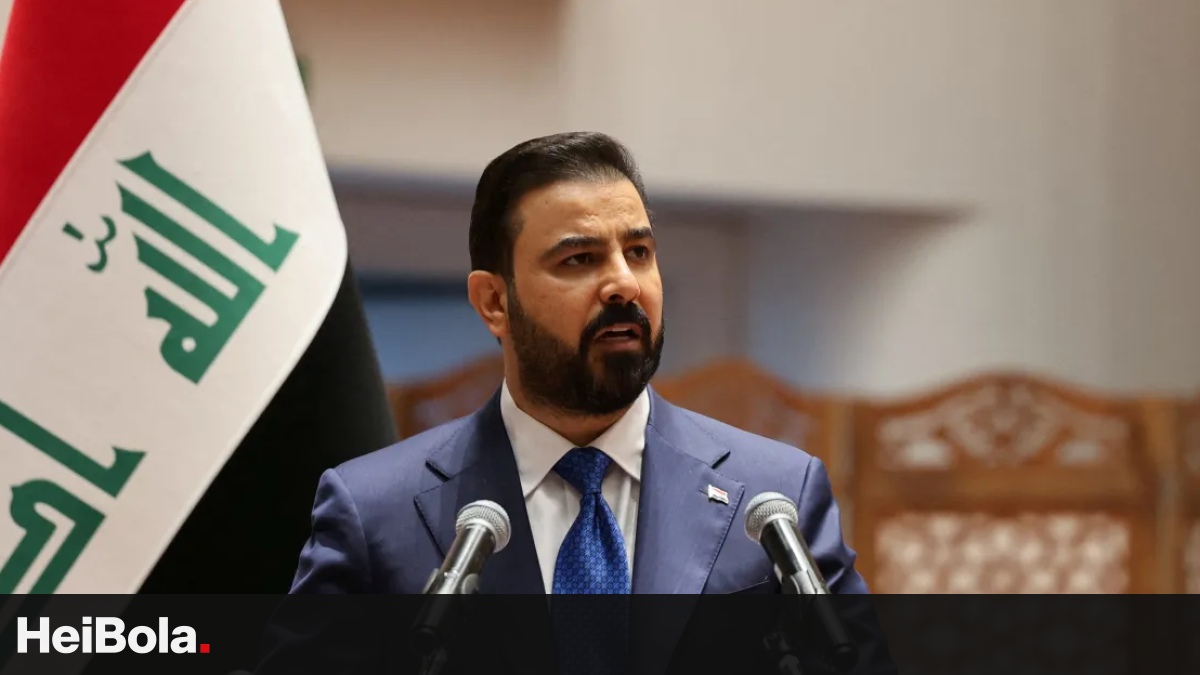
An anticorruption campaign initiated by Iraq's Prime Minister Ali al-Zaidi has led to the arrest of senior officials and the seizure of approximately $86 million in cash, along with properties and vehicles. This effort aims to address the longstanding issue of financial corruption in the country.
The Iraqi Supreme Judicial Council reported that the cash seized is linked to alleged corruption involving Adnan al-Jumaili, the detained Oil Ministry Undersecretary for Refining Affairs. Al-Jumaili was arrested at his home in al-Ishaqi on May 30 as part of a broader investigation into government contracts.

In addition to al-Jumaili, Raed al-Jubouri, the former governor of Salah al-Din, was also arrested. Al-Jubouri was the director of health in the governorate at the time of his arrest. Activists have criticized Iraq's political structure for enabling corruption, with Transparency International ranking Iraq 136 out of 182 countries in its 2025 Corruption Perceptions Index.
The report noted some improvements but emphasized that significant structural hurdles remain.

Prime Minister al-Zaidi, who took office on May 16, has established the Supreme Sovereign Council for Integrity, Oversight and Recovery of Public Funds. This body is tasked with monitoring ministries and non-ministerial entities to prevent the waste of public funds and recover state assets.
Government spokesman Haider al-Aboudi stated that corruption is viewed as one of the gravest challenges threatening Iraq's political order.
Despite these efforts, skepticism remains regarding the effectiveness of the campaign. Mousa Faraj, former head of the Iraqi Federal Integrity Commission, urged the Prime Minister to address significant past corruption cases, particularly those involving the Central Bank, where corruption is believed to have reached tens of billions of dollars.
Corruption in Iraq is a deeply rooted issue, with an estimated $240 billion smuggled out of the country since the 2003 invasion. Experts highlight the challenges of recovering lost funds, citing an outdated legal system that inadequately addresses financial crimes.
Mohammed Raheem al-Rubie, head of the al-Nahrain Foundation for Transparency and Integrity, noted that restoring stolen funds is a difficult, if not impossible, process due to these legal limitations.